
A heavy leather jacket often feels stiff because thick leather is built to be durable, protective, and long-lasting rather than immediately soft. Unlike lightweight fashion leather, heavy hides contain more dense fibers, and those fibers need time and movement before they become flexible.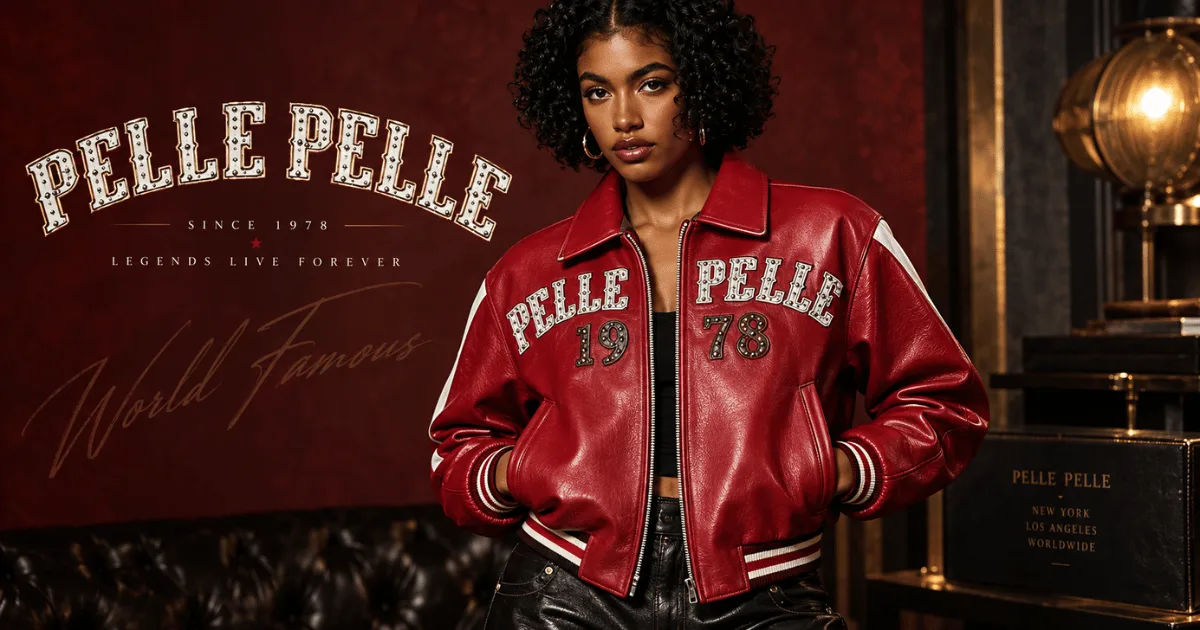
The tanning process, leather type, finish, lining, temperature, and even how the jacket is stored can all affect how rigid it feels.
If you have recently bought a substantial jacket from Pelle Pelle Store, that initial stiffness does not necessarily mean something is wrong. In many cases, it is simply part of owning a thick leather garment that needs time to develop its natural character.
Why Heavy Leather Jackets Feel Stiff
The biggest reason a heavy leather jacket feels stiff is the physical structure of the hide itself. Leather is made from a network of tightly connected collagen fibers. When the hide is thick, these fibers are packed into a larger, denser structure.
That density gives heavy leather its strength. It also means the material does not bend as easily as thin leather.
A lightweight lambskin jacket may feel soft almost immediately because its fibers and thickness allow it to fold easily. A thick cowhide or horsehide jacket is different. It may resist bending when it is new, particularly around the shoulders, elbows, cuffs, and waist.
This is why a jacket from Pelle Pelle Store made from substantial leather can initially feel almost board-like compared with a thin fashion jacket.
Leather Thickness Makes a Major Difference
Leather thickness is one of the most important factors behind stiffness.
A thick hide has more material that needs to move when you bend your arm or twist your body. The increased thickness also creates more resistance around seams and folded areas.
For example, a jacket made from heavyweight cowhide can feel significantly firmer than one made from lightweight lambskin. Both are genuine leather, but they behave differently because their physical structures are different.
Heavy leather is often selected because it provides durability and a substantial appearance. If your priority is a soft, relaxed feel straight out of the box, lightweight leather may be more suitable.
However, if you want a jacket that develops character over many years, heavier leather can be an excellent choice.
The Type of Leather Matters
Not all leather becomes flexible at the same rate.
Cowhide is commonly associated with durable motorcycle and work jackets. It can be thick, firm, and resistant to movement when new. With regular wear, it gradually becomes more comfortable.
Horsehide can be even more resistant to bending initially. Many horsehide jackets have a firm surface and strong structure that soften slowly through repeated use.
Lambskin generally starts much softer. Its delicate fibers make it comfortable and flexible, but it may not offer the same ruggedness as heavyweight cowhide.
Goatskin has another type of character. It can be durable while maintaining reasonable flexibility, depending on its thickness and finish.
Therefore, simply asking whether a jacket is made from "real leather" does not explain how stiff it will feel. The animal hide, thickness, tanning method, and finishing process all contribute to the final result.
Tanning Can Affect Stiffness
Tanning transforms an animal hide into leather, but different tanning methods create different textures and levels of flexibility.
Vegetable-tanned leather can initially be relatively firm. It often develops a beautiful patina as it ages, but it may require substantial wear before it feels relaxed.
Chrome-tanned leather is often more flexible, although its final feel depends heavily on how it is processed and finished.
Some manufacturers intentionally preserve a firmer structure because customers want a jacket that holds its shape. Others process the leather to create a softer hand feel.
When you purchase a heavy jacket from Pelle Pelle Store, understanding that construction and finishing choices influence comfort can help you set realistic expectations.
The Finish on the Leather Can Make It Firmer
The surface finish is another overlooked factor.
Leather may receive oils, waxes, dyes, coatings, or other finishing treatments. These treatments can change how the surface bends and feels.
A heavily finished leather can feel smoother and more rigid than a minimally finished hide. A waxed surface may also initially resist folding until the material begins responding to movement.
This does not automatically indicate poor-quality leather.
In fact, a firm finish can sometimes provide useful protection against moisture, scuffing, and everyday wear. The important point is that surface treatment contributes to the overall character of the jacket.
New Leather Has Not Been Broken In
One of the simplest explanations is also one of the most important: the jacket is new.
Leather is not like a knitted sweater that becomes comfortable after being worn once or twice. A heavy hide may need weeks or months of regular movement before it starts conforming to the wearer's body.
Every time you bend your arms, sit down, reach forward, zip the jacket, or move your shoulders, the leather experiences small amounts of mechanical movement.
Over time, those repeated movements can relax specific areas.
This natural break-in process is one reason experienced leather-jacket owners often appreciate an initially firm jacket. Instead of having a completely finished appearance on day one, the garment gradually develops marks, creases, and flexibility that reflect the owner's lifestyle.
Temperature Can Change How Leather Feels
Leather can also feel different depending on temperature.
Cold conditions can make many leather garments feel firmer. The oils and moisture within the material respond to environmental conditions, and a cold jacket may feel less flexible than it does in a warmer room.
If you take a heavy leather jacket from a cold closet and immediately put it on, it may feel unusually rigid.
After wearing it indoors for a while, body heat can make it feel somewhat more pliable.
That does not mean you should deliberately expose leather to extreme heat. Direct heaters, radiators, hair dryers, and other strong heat sources can damage leather, dry it out, or cause unwanted changes in its surface.
The Lining Can Add to the Stiff Feeling
Sometimes the leather itself is not the only reason a jacket feels rigid.
A heavy lining, insulation, shoulder structure, padding, or reinforced stitching can restrict movement. A winter jacket may feel much stiffer than an unlined leather jacket made from exactly the same hide.
This is especially noticeable around the shoulders and arms.
If you raise your arms and feel resistance, check whether the restriction comes from the leather, the lining, or the overall construction.
A well-made jacket can still feel structured because multiple layers are working together.
Seams and Construction Influence Flexibility
Construction details can also make a jacket feel stiff.
Heavy thread, reinforced seams, thick panels, metal hardware, quilted insulation, and multiple layers of leather can all contribute to a structured feel.
The areas around pockets may feel particularly firm because several layers can overlap there.
Likewise, the collar can remain stiff because it is often reinforced to maintain its shape.
A substantial jacket from Pelle Pelle Store may therefore feel firm not only because of its leather but because of its complete construction.
How Long Does Heavy Leather Take to Soften?
There is no universal break-in period.
A lightweight jacket may become comfortable relatively quickly, while a heavyweight jacket can take considerably longer. Your wearing habits also matter.
Someone who wears a jacket several times every week will naturally create more movement than someone who wears it once a month.
The goal should not be to make the jacket extremely soft as quickly as possible. The better approach is to allow the leather to gradually adapt without damaging its fibers or finish.
Heavy leather often becomes more flexible in the places where the body naturally moves first. Elbows, shoulders, sleeves, and the waist commonly develop noticeable changes before the rest of the jacket.
Can You Break In a Stiff Leather Jacket Naturally?
Yes. Regular wear is usually the safest approach.
Wear the jacket around the house for short periods. Move your arms normally. Walk outside. Sit down. Drive if the jacket is comfortable and safe for that activity. Allow the garment to experience ordinary movement.
You can also gently flex the sleeves by hand, but avoid aggressively folding or twisting the leather.
The purpose is to encourage natural movement rather than force the material into unnatural shapes.
With a jacket from Pelle Pelle Store, patience is often more useful than aggressive softening methods.
Should You Apply Leather Conditioner?
Leather conditioner can sometimes help, but it should not automatically be your first response.
Different leather finishes require different care products. Some heavily finished or specially treated jackets may not respond well to every conditioner.
Before applying anything, check the manufacturer's care instructions.
If conditioning is appropriate, use a product specifically designed for the type of leather and test it on a small, hidden area first.
Apply a small amount rather than soaking the material.
Too much conditioner can make leather greasy, darken the surface, or alter its appearance. The objective is maintenance, not turning heavyweight leather into soft fabric.
Avoid Using Excessive Heat
One of the worst shortcuts for softening leather is excessive heat.
Using a hair dryer, placing the jacket near a radiator, or leaving it in intense sunlight can cause problems. Heat can remove natural moisture and oils from the leather.
Once leather becomes excessively dry, it may develop cracking, brittleness, discoloration, or other damage.
If your Pelle Pelle Store jacket feels stiff, patience is much safer than trying to accelerate the process with extreme temperatures.
Avoid Soaking the Jacket
Water is another common mistake.
Some people assume that wetting leather and wearing it until it dries will quickly mold it to the body. This approach can create unpredictable results.
Excessive moisture can affect dyes, finishes, adhesives, linings, and the overall shape of the garment.
If the jacket becomes wet accidentally, allow it to dry naturally at room temperature. Keep it away from direct heat.
Do not deliberately soak a heavy leather jacket simply because it feels stiff.
Fit Can Make Stiffness Feel Worse
A jacket that is too small may seem much stiffer than it actually is.
When the shoulders are tight, the sleeves are short, or the chest is restrictive, every movement creates tension. This can make the leather feel unusually rigid.
A correctly fitted jacket should allow reasonable movement even when the leather is new.
On the other hand, a jacket that is excessively oversized can also feel awkward because extra leather folds in unexpected places.
The right fit allows the break-in process to happen naturally around the body's movement patterns.
How to Tell Normal Stiffness From a Problem
Some stiffness is completely normal.
However, you should pay attention if the leather feels unusually brittle, cracks when gently flexed, flakes on the surface, or shows signs of serious drying.
A new heavy jacket should feel firm, but it should not behave like a piece of dry cardboard.
Look closely at the surface and seams. Healthy leather can be stiff while still having some natural flexibility.
If you notice serious defects, contact the seller or manufacturer before attempting home treatments.
Heavy Leather Usually Becomes More Comfortable With Age
One of the most appealing characteristics of heavyweight leather is that it can become more personalized with time.
Instead of simply becoming "old," good leather can develop a patina. Creases form around the elbows. The sleeves begin reflecting how you move. The waist can develop subtle folds. The surface may become richer and more individual.
This process gives the jacket a history.
A new Pelle Pelle Store jacket may have a clean, structured appearance, while the same jacket after years of regular wear can look completely different.
That transformation is part of the attraction of substantial leather clothing.
Why Stiffness Can Actually Be a Good Thing
It is easy to assume that softer automatically means better.
That is not always true.
A very soft leather jacket may be comfortable immediately, but softness can come from thinner construction or a different type of hide. A heavyweight jacket is often designed to provide structure, durability, and a distinctive appearance.
Stiffness can therefore be evidence of substantial material rather than a defect.
The key question is whether the stiffness is appropriate for the leather and construction.
If the jacket gradually becomes easier to move in while maintaining its structure, that is generally a positive sign.
How to Break In a Heavy Leather Jacket Safely
Start by wearing it regularly without forcing it.
Move naturally while wearing it. Bend your arms, walk, sit, and perform normal daily activities.
Store the jacket on a wide, sturdy hanger so the shoulders maintain their shape.
Keep it in a cool, dry environment away from direct sunlight and strong heat.
If the manufacturer recommends conditioning, follow those instructions carefully and use an appropriate leather-care product.
Most importantly, give the jacket time.
Trying to make heavyweight leather soft overnight can cause more damage than benefit.
A quality jacket from Pelle Pelle Store should be treated as a long-term garment rather than something that needs to be completely broken in immediately.
Common Mistakes That Damage Stiff Leather
Several popular methods can cause unnecessary damage.
Do not aggressively twist the jacket.
Do not soak it in water.
Do not put it in a washing machine unless the manufacturer explicitly says it is washable.
Do not tumble-dry it.
Do not use household oils or cooking oils as leather conditioners.
Do not place it directly beside a heater.
Do not repeatedly bend one area until deep creases appear.
These shortcuts may produce temporary softness but can compromise the leather's structure and finish.
When Should You Expect the Jacket to Feel Comfortable?
The answer depends on the leather, construction, frequency of wear, and personal expectations.
A person who expects a heavyweight jacket to feel like a sweatshirt will probably find it stiff for quite a while.
Someone who understands that substantial leather needs a break-in period will usually find the experience much more rewarding.
Pay attention to gradual changes rather than expecting a dramatic transformation.
The sleeves may loosen first. The shoulders may become easier to move. The torso may begin conforming to your shape. Eventually, the entire jacket can feel considerably more natural while still retaining its original weight and structure.
Choosing the Right Leather for Your Preference
If you strongly dislike stiffness, consider lighter leather or softer constructions.
Lambskin is often a better choice for people who prioritize immediate softness and flexibility.
If durability and structure are more important, heavyweight cowhide or other substantial hides may be preferable.
There is no single best leather for everyone.
The best choice depends on whether you want fashion, warmth, durability, protection, or a combination of these qualities.
Understanding this difference before buying can prevent disappointment later.
Conclusion
A heavy leather jacket feels stiff primarily because thick leather contains dense fibers that resist bending, especially when the material is new. Leather type, thickness, tanning, finishing, lining, stitching, temperature, and fit can all add to that initial rigidity. A substantial jacket is designed to have structure, so stiffness alone should not be treated as a sign of poor quality.
The safest way to soften heavyweight leather is usually through regular, natural wear. Let your movements gradually shape the garment instead of trying to force the process. Avoid excessive heat, soaking, aggressive twisting, and unsuitable household products. If conditioning is recommended for the particular leather, use an appropriate product carefully and follow the manufacturer's guidance.
The appeal of a heavy leather jacket is that it can change with its owner. Over time, the material can develop softer movement, natural creases, and a distinctive patina while retaining the strength and character that made it attractive in the first place. Whether you purchase from Pelle Pelle Store or another reputable leather specialist, patience is one of the most important parts of owning heavyweight leather.
Ultimately, the stiffness of a new leather jacket is often less of a problem than people assume. It can be the beginning of the break-in process rather than evidence that something is wrong. Give the leather time, care for it correctly, and wear it naturally. With consistent use, a rigid new jacket can gradually become a comfortable, personalized garment that looks and feels increasingly unique