
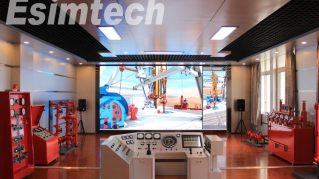
The veracity of the conditions Drilling Simulation Systems pose a threat to human life that currently existEven though downhole operation simulators are able to simulate emergency situations such as fires, gas explosions, and collapses, etc., the pressure, sense of urgency, and emergency response that occur in the simulator cannot be compared to the pressure, sense of urgency, and emergency response that occur in actual situations. This is due to the fact that the simulator does not reflect the real-life circumstances.
Training with downhole operation simulator allows for operations to be practiced without actual risk, which helps avoid unforeseen circumstances that could result in accidents or injuries. This is important for safety reasons. The utilization of simulators in the training process permits the practice of operations without the presence of actual risk, which contributes to the effectiveness of the process.
Well intervention refers to operations that are conducted on existing wells to enhance their productivity, increase their lifespan, or address specific issues. These operations can be performed using various methods, including slickline, coiled tubing, and hydraulic fracturing. The types of well intervention can range from minor well stimulation to major well control operations.
Instruments digital for the monitoring ofMonitoring requires a significant amount of focus, and one of the most important "soft skills" for a monitor is the ability to multitask, as the monitoring of multiple wells in real time is typically necessary at the same time. Because of safety concerns, each operator is limited to a maximum of four wells.
On the other hand, the ongoing operational costs associated with wire-based sensors are noticeably lower than those associated with wireless ones. Near-bit sensors are more expensive than BHA sensors and top-of-pipe sensors; however, they offer greater value to your drilling operation and are, as a result, worth the additional investment that is required to purchase them.